Scalability in Critical Systems
Backend and microservices modernization for high availability under corporate standards (Carga Control / Feeling) — without stopping the business while the engine gets rebuilt.
High-volume systems where downtime has real cost. Backend diagnosis, phased microservice migration, HA/redundancy and observability without stopping the business.
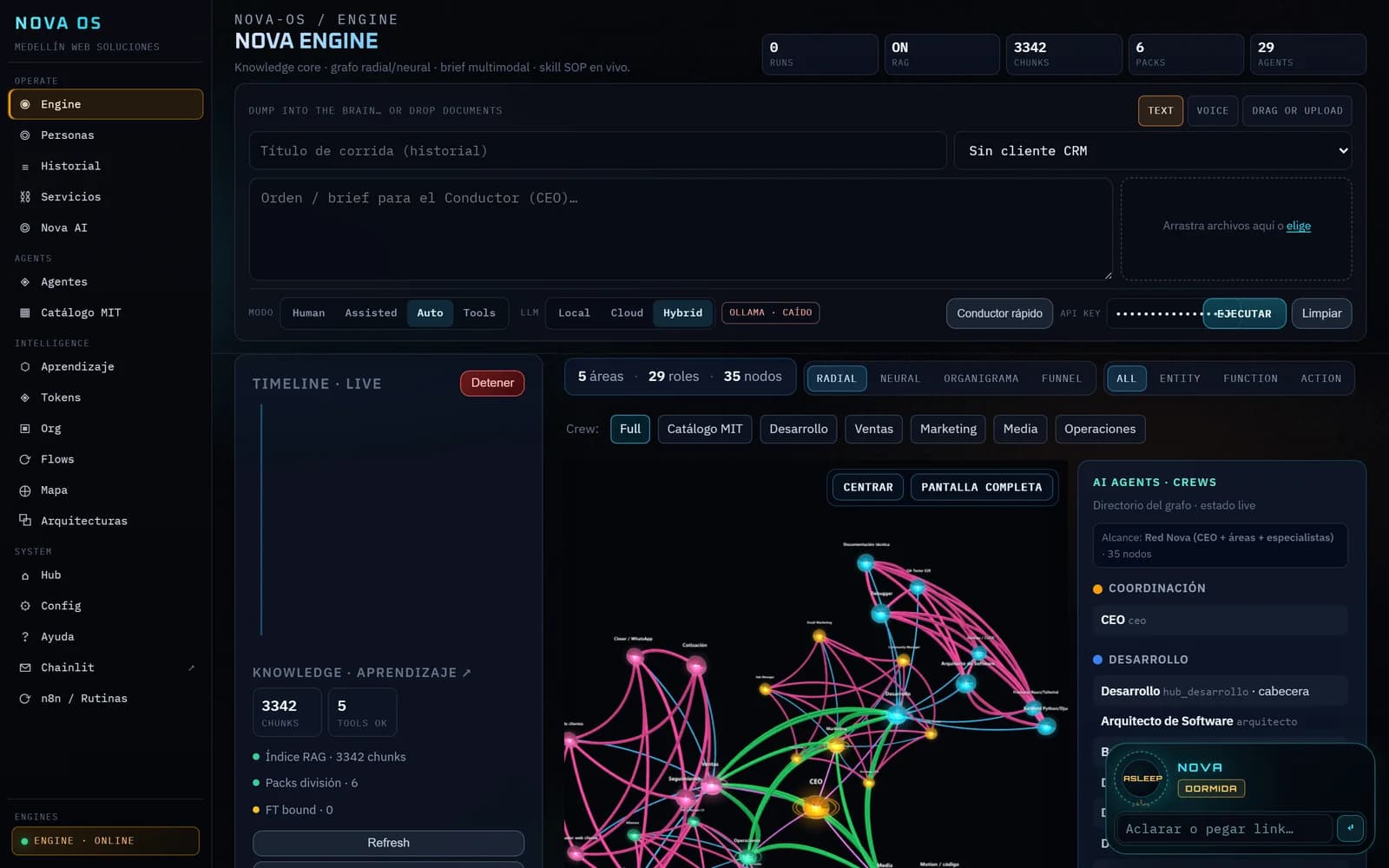
Real screenshots of the system in operation.

Problem
- 1Sustain peaks without SPOFs.
- 2Migrate the monolith without a big-bang.
- 3Meet corporate stability standards.
- 4Operate on metrics, not intuition.
The approach
Performance diagnosis
Bottlenecks and architecture debt prioritized by impact.
Progressive migration
Extract critical services with clear API contracts.
HA and redundancy
Balancing, replicas, remove single points of failure.
Observability
Metrics, logs, traces for evidence-based incident response.
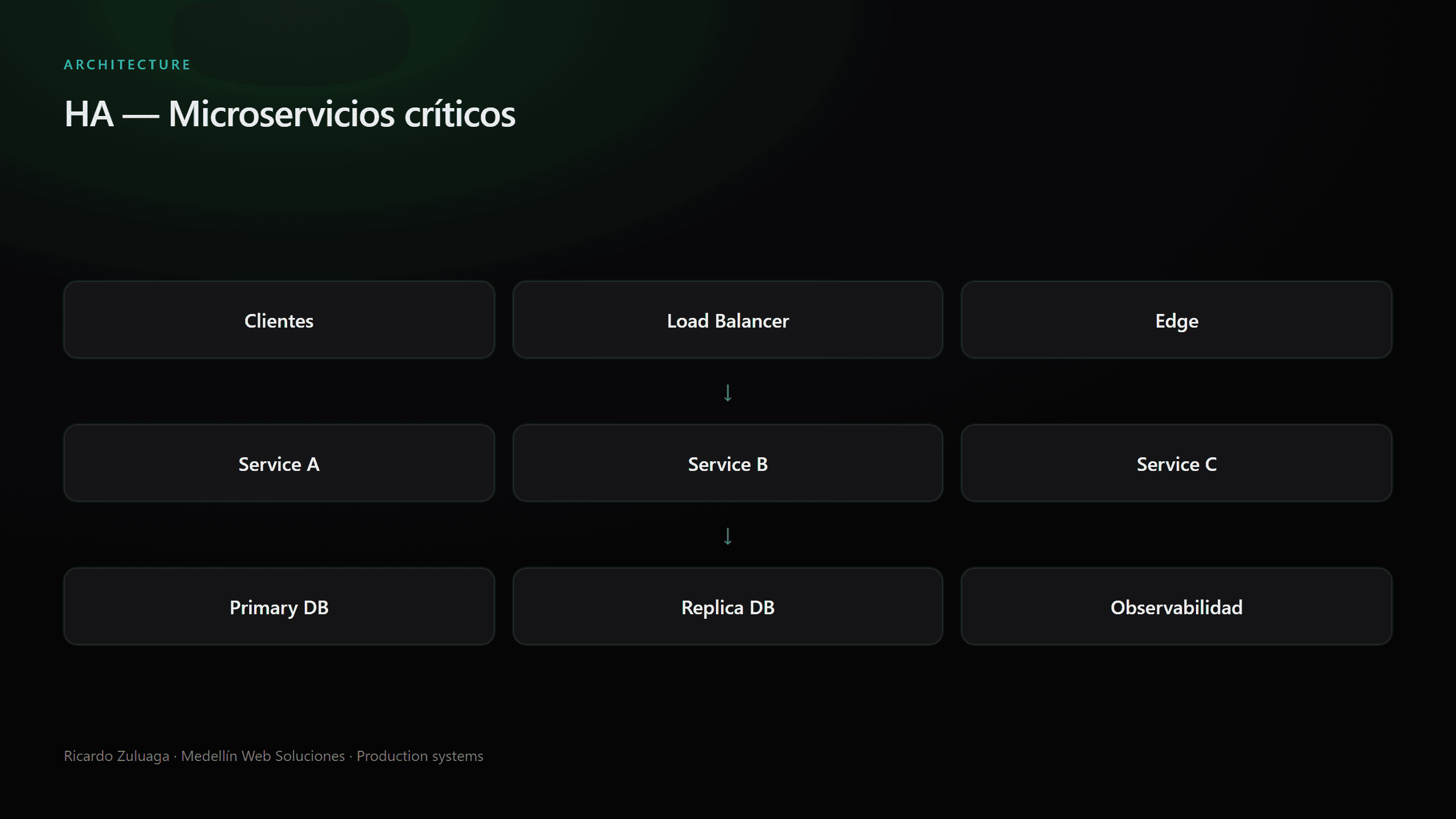
Clients → load balancer → redundant service cluster, primary + replica DB and cross-cutting observability.
System layers
- 01Edge / load balancer
- 02Microservice cluster
- 03Versioned REST APIs
- 04Primary + replica data
- 05Docker containers
- 06Cross-cutting observability
Applied stack
- Node.js
- Microservices
- REST
- Docker
- PostgreSQL
- Observability
Design decisions
Phased migration vs rewrite
Protects revenue and reduces regression risk.
Split only where it hurts
Avoids cosmetic microservices and ops cost.
Observability before blind scale-out
Scaling without telemetry multiplies chaos.
Impact
- HA
- Design without SPOFs
- Phased
- Migration without business cutover
- Ops
- Metrics-driven operations
Key points
- Modernization compatible with operational continuity.
- Platform engineering focus—not cosmetic rewrite.
- Ready for corporate stability scrutiny.
Fit / how to hire
Hire this if your backend outgrew its architecture and downtime already costs you real money. Fits as a Staff/Senior Platform role, or as a one-off audit followed by phased implementation.
Book a technical call