LEXIA — Legal Intelligence OS
Legal operating system with FastAPI, Streamlit OS and Dash analytics: a full Python product for AI-assisted legal work.
LEXIA treats legal work as an OS—not a loose chat. Operational surface (Streamlit), analytics (Dash) and API are separated, with demo seed and Docker path to production.
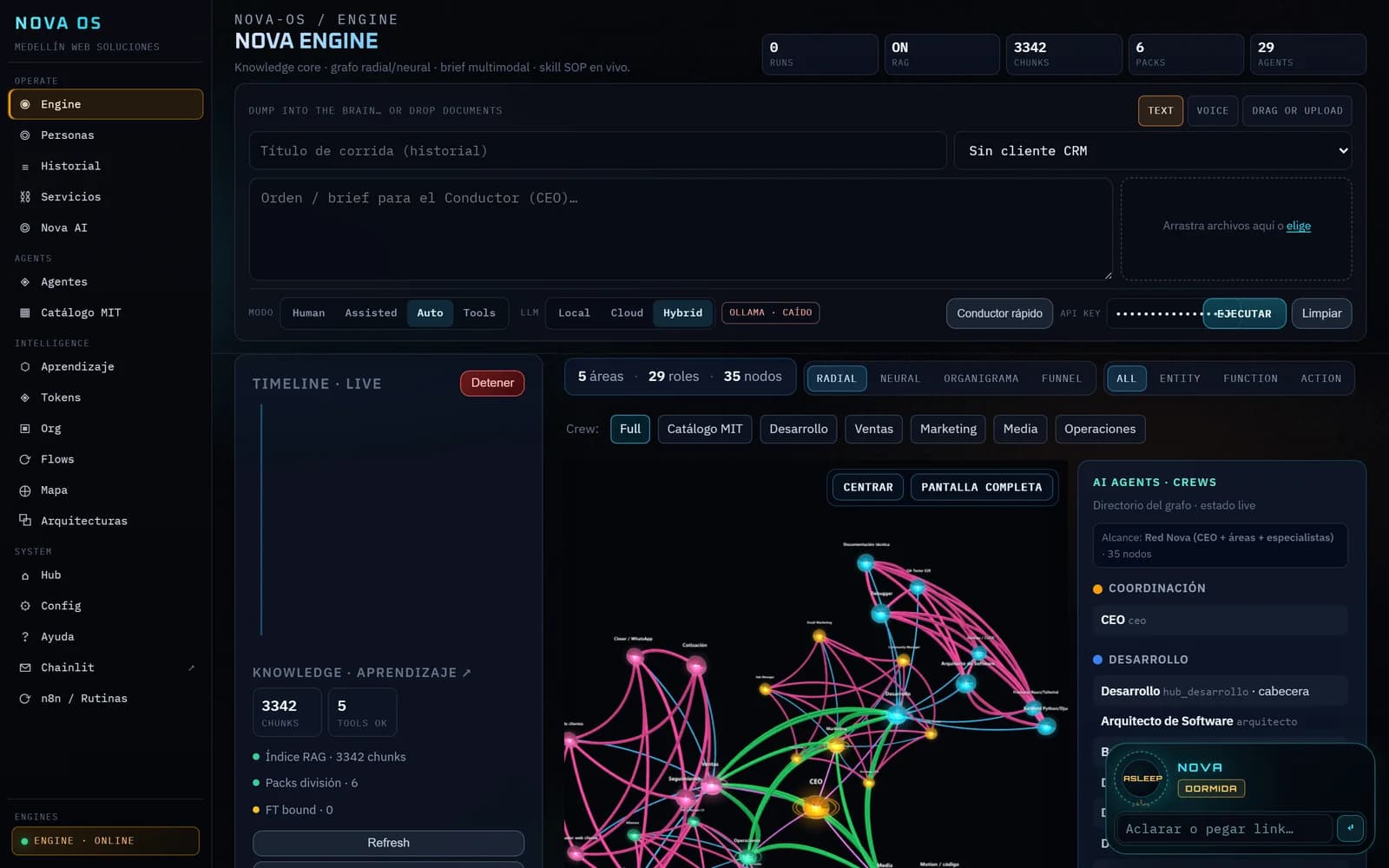
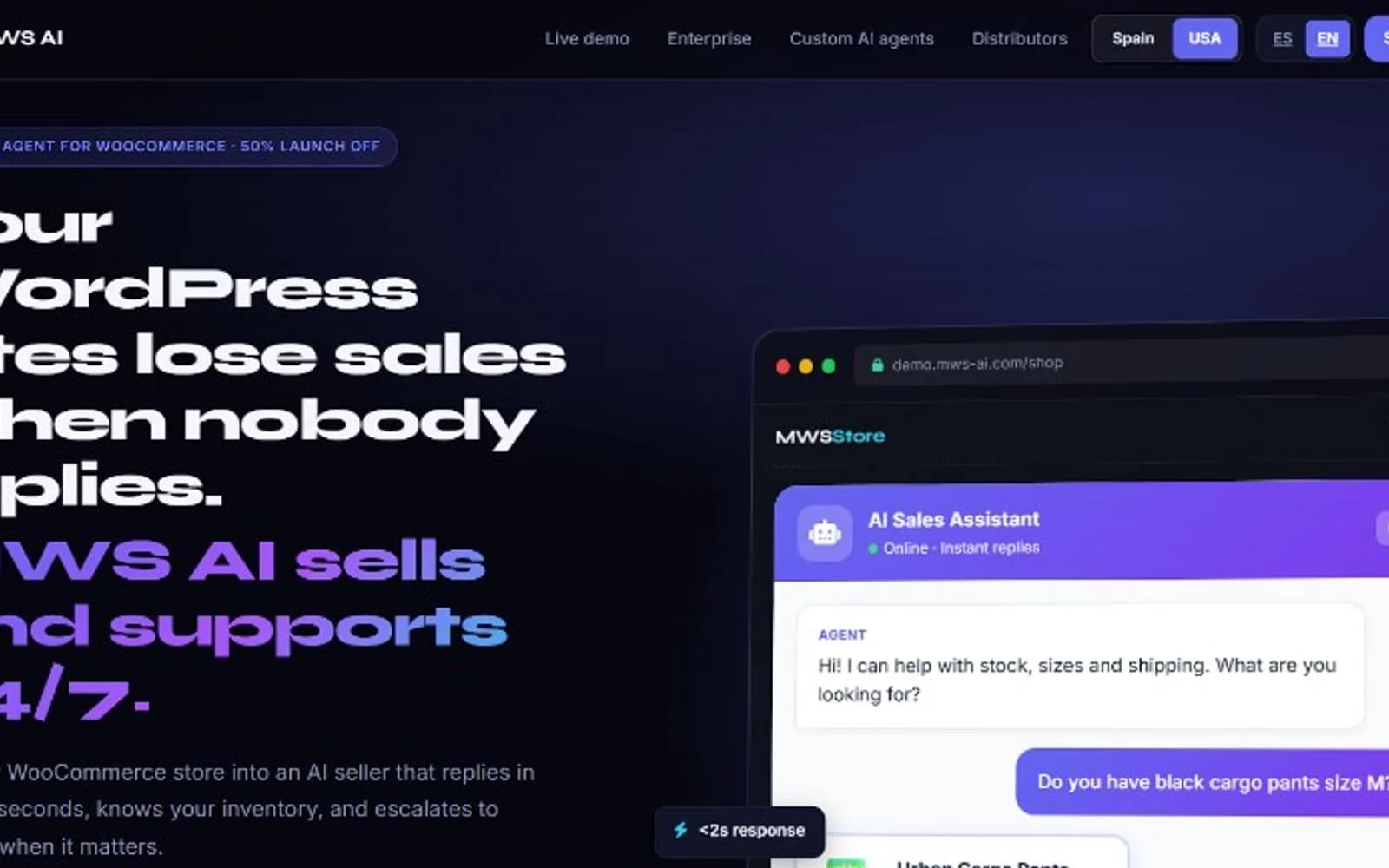
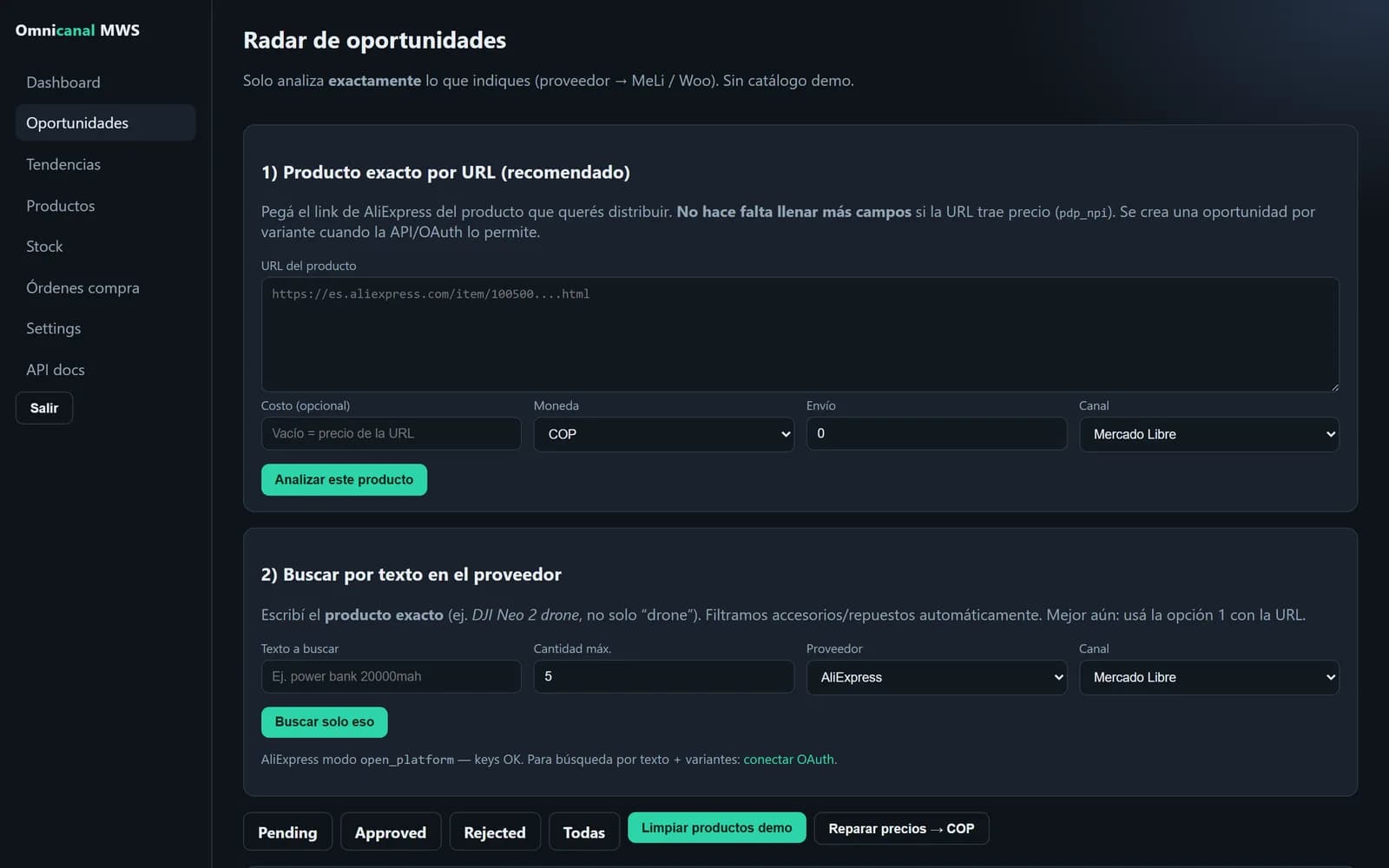
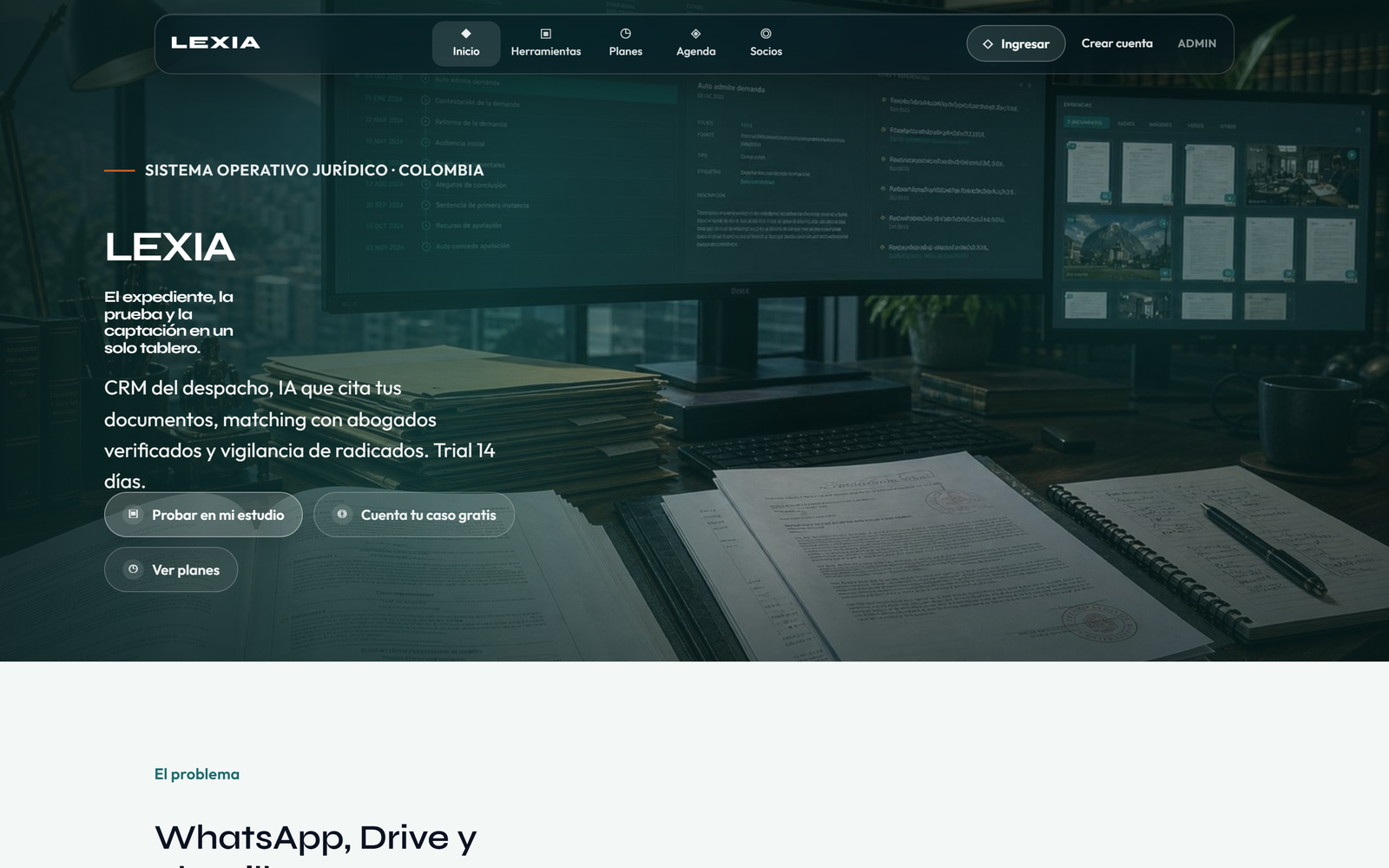
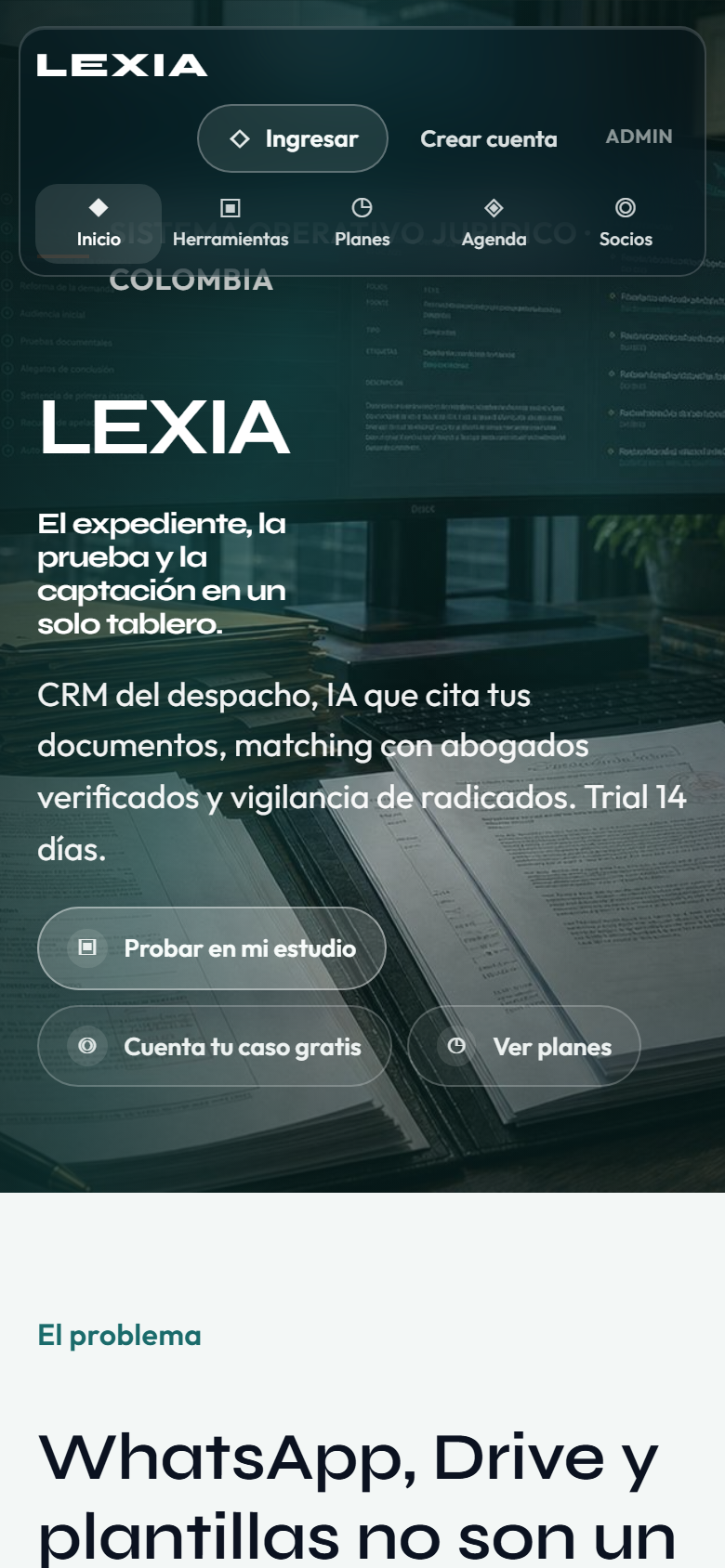
Real screenshots of the system in operation.
Problem
- 1Multi-surface product without splitting the domain.
- 2Reproducible demo onboarding.
- 3Serious deploy (dev vs prod).
- 4Distinct user roles (ops vs analytics).
The approach
API as core
FastAPI owns domain and contracts.
Streamlit OS
Fast operational UI for daily flow.
Dash analytics
Separate managerial/analytical reads.
Dual Docker
Dev compose plus production VPS guide.
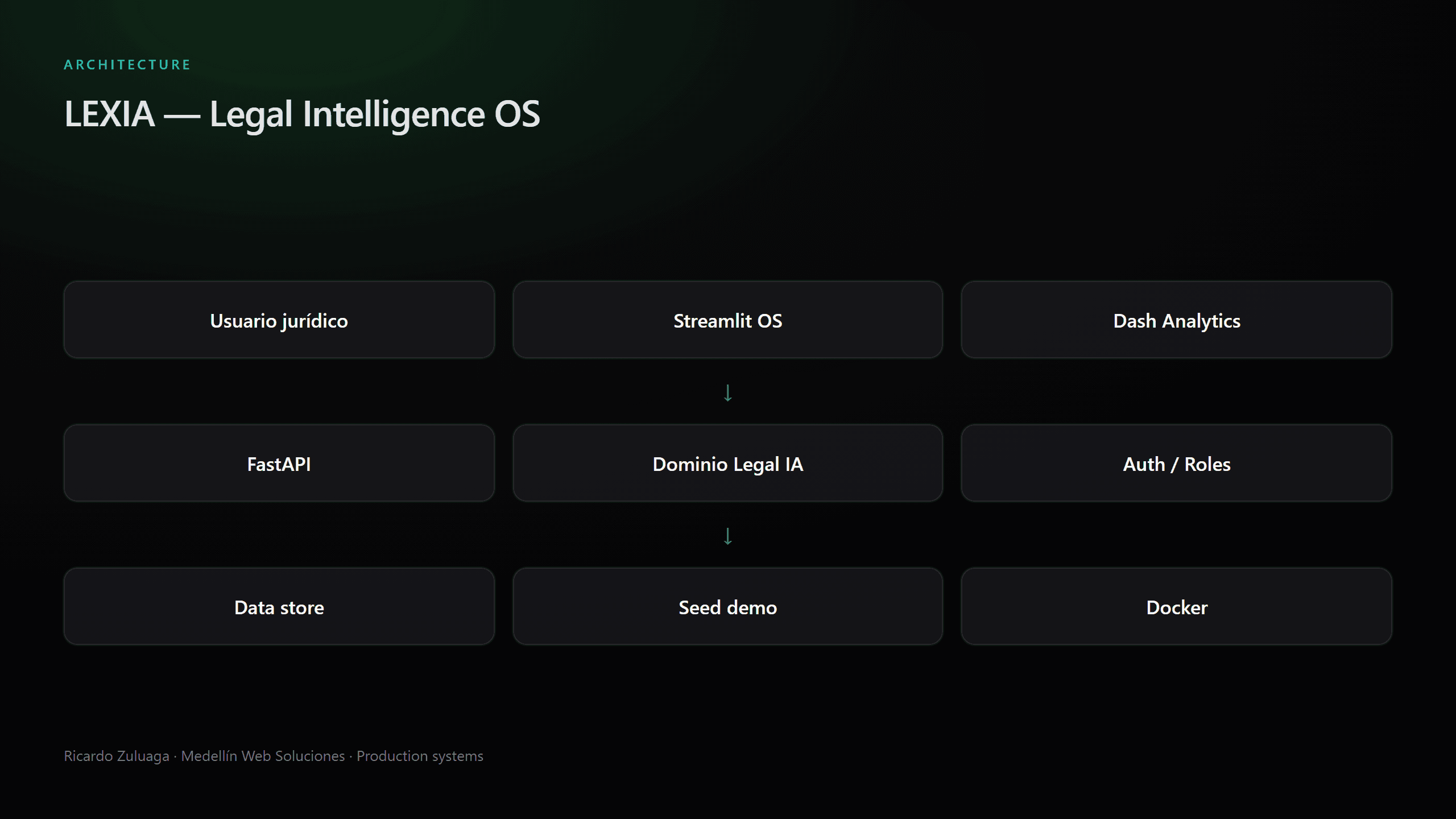
User → Streamlit OS / Dash analytics → FastAPI → legal AI domain + data store, Docker-packaged.
System layers
- 01Streamlit OS (ops)
- 02Dash (analytics)
- 03FastAPI (domain)
- 04Auth / demo roles
- 05Data + seed scripts
- 06Docker infra
Applied stack
- Python
- FastAPI
- Streamlit
- Dash
- Docker
Design decisions
Python-only vs React SPA
Faster vertical delivery with one language/team.
OS separated from analytics
Different jobs-to-be-done and usage cadence.
First-class demo seed
Sales and QA need a reproducible environment.
Impact
- 3
- Integrated product surfaces
- Demo
- Seed + evaluation login
- VPS
- Documented Docker path
Key points
- Vertical product ownership—not just an integration.
- Python end-to-end without React dependency.
- Built for commercial demos and real ops.
Fit / how to hire
Hire this if you need a vertical-product architect for a regulated sector (LegalTech and similar) who delivers API, ops UX and analytics as one system—not three vendors that don't talk to each other.
Book a technical call